The Wall Between You: Party Wall Rules Without the Legal Fog

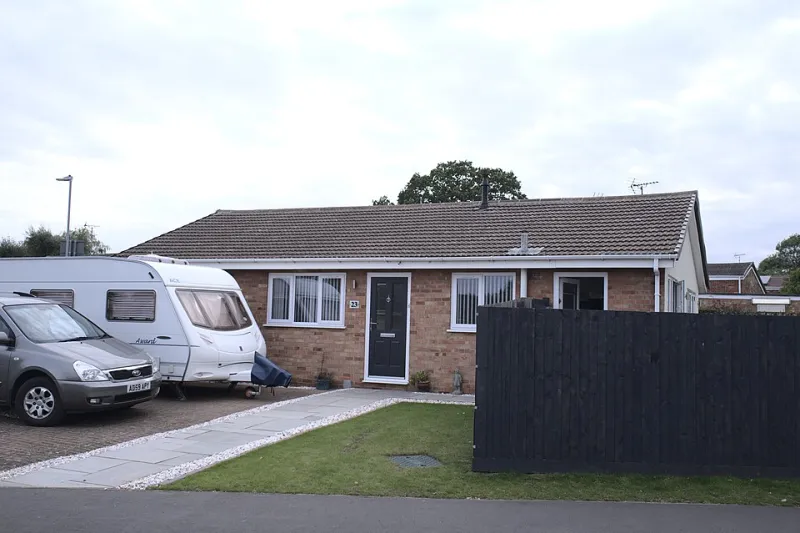
Photo: Alan Hughes , CC BY-SA 2.0, via Wikimedia Commons
Most homeowners do not wake up wanting to read legislation. Fair enough. But if your refurbishment touches a shared wall, or your basement dig creeps near a neighbour's foundations, the Party Wall etc. Act 1996 can decide whether your project runs smoothly or stalls in a pile of letters. In 2026, with loft conversions and rear extensions squeezing into tight urban plots, it is worth getting your head around the basics before the first skip arrives.
What the Act is really about
The Party Wall etc. Act 1996 is not a boundary dispute law. It is not there to settle arguments about who owns the hedge. It is a process for making sure that work near a shared structure, or near a neighbour's foundations, is agreed and documented before it starts. The aim is simple: you can carry out your works, and your neighbour's property does not end up damaged or undermined without a paper trail.
It mainly covers three situations. First, work to a party wall itself, such as cutting into it, raising it, underpinning it or demolishing and rebuilding it. Second, work to a party fence wall that straddles the boundary. Third, excavation close to a neighbour's property, which is where basement projects and deep foundations often come in.
Not every job near a boundary needs a notice. Replastering your side of a shared wall usually does not. Nor does putting up shelves. But once you are cutting beams into a party wall for a loft conversion, or digging down near next door's footings, the Act can apply.
A simple decision path
Think of this as a flowchart you can run in your head before you commit to a start date.
- Are you working on a wall that is shared with a neighbour, or that sits on the boundary? If yes, a party wall notice is likely. If no, move to the next question.
- Are you excavating within 3 metres of a neighbour's structure and deeper than their foundations? If yes, notice is likely. Also check the 6 metre rule for deeper excavations. If no, keep reading.
- Are you only doing cosmetic work on your own side? If yes, the Act probably does not apply, though planning and building regulations might.
- If you answered yes to question 1 or 2, serve notice early. For party wall works, that normally means at least two months before starting. For excavation, it is usually at least one month.
- If you are unsure, get advice before you book trades. A short conversation with a party wall surveyor is cheaper than a stopped job.
That is the short version. The long version depends on the detail, which is why the scenarios below matter.
Loft conversions
A loft conversion is the classic party wall trigger. You may need to cut steel beams into a shared wall, raise the party wall to create headroom, or alter the roof structure where it meets next door. Even if the wall looks solid and everyone is friendly, the Act can still apply.
The practical move is to talk to your neighbour before the notice lands on the doormat. Not because the notice is optional, but because a conversation makes the formal step less confrontational. Explain what is happening, share the drawings, and say when you hope to start. Then serve the notice properly.
Rear extensions
A rear extension might not touch the party wall at all. But if it involves digging new foundations close to next door, the excavation rules can kick in. This is common in terraced and semi-detached homes where the extension runs along the boundary.
Do not assume that because the wall is not shared, the Act is irrelevant. Look at the distance, the depth, and the neighbour's foundation level. If you are within the relevant distance and going deeper, get advice. It is also sensible to record the condition of neighbouring walls and paving before work starts, even where the Act does not strictly apply.
Basements
Basement projects are where party wall matters get serious. Excavation near a neighbour's foundations can affect stability, drainage and settlement. The Act provides a framework for notice, surveyor involvement and an award that sets out how the work should be done.
This is not the area to wing it. A basement dig without the right notices can lead to delays, disputes and expensive remedial work. Bring in an experienced party wall surveyor early, before the structural engineer's drawings are finalised if possible. Good advice at design stage is cheaper than a rescue mission later.
Notices, surveyors and awards
The notice should be in writing and include enough detail for the neighbour to understand the work. Drawings help. So does a clear start date and a sensible explanation.
Your neighbour usually has 14 days to respond. They can consent, or they can dissent. If they consent, you may not need a surveyor, but it is still wise to record the condition of the shared structure before work begins. If they dissent, or do not respond, a surveyor is appointed. That can be one agreed surveyor or one surveyor for each side, depending on the circumstances.
The surveyor's job is not to take sides. They prepare a party wall award, which is a document setting out what work is allowed, how and when it happens, access arrangements, and any safeguards. You should not start until the notice process is complete and any award is in place.
Who pays for all this?
As the person carrying out the work, you should expect to pay for the party wall process. That usually means surveyor fees and related costs. There can be exceptions or cost-sharing arguments in some cases, but budgeting on the basis that you pay is the safe approach. If damage happens, the award can set out who puts it right and how.
This is also why a cheap quote that ignores party wall costs is not really cheap. It is just a quote with a hole in it.
How to keep it neighbourly
Start early. Share information. Use an experienced surveyor. Keep dates realistic. And do not ignore a neighbour's letter because the project is stressful. A prompt, calm response usually costs less than a long dispute.
At JDP Contracting, the straight-talking view is this: party wall paperwork is not glamorous, but it is part of the build. Sort it before the scaffold goes up, not after the first crack appears. This is general guidance, not legal advice. If your project touches a shared wall or nearby foundations, get a party wall surveyor involved early.