Why the Plumber Should Meet the Plasterer First: The Order of Works on a Refurb
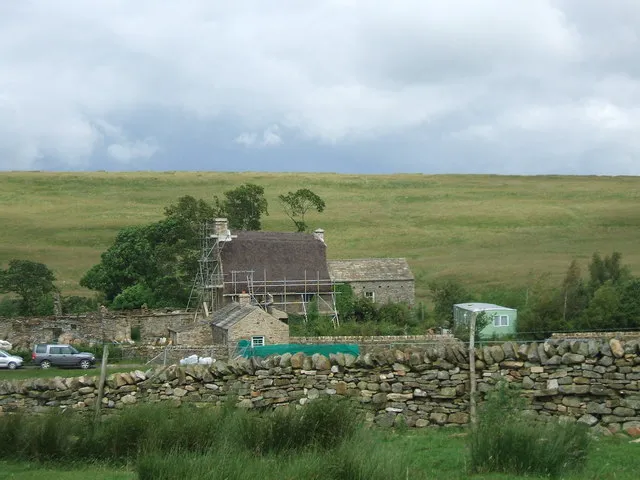
Photo: David Brown, CC BY-SA 2.0, via Wikimedia Commons
Ask three builders for a programme and you'll get three documents of wildly different quality. One will be a proper bar chart with dependencies. One will be a list on the back of a delivery note. One will be a WhatsApp message saying 'start Monday, about eight weeks'.
All three might deliver a decent job. But only one of them has thought about the order, and order is where refurbs quietly bleed money. Here's the sequence most UK domestic projects follow, why it matters, and how to tell whether the programme you've been handed is actually a sequence or just a wish list.
The short version of why sequence costs money
Every trade that arrives too early has to come back. Coming back means paying twice, waiting, and sometimes undoing something finished. Plaster gets chased for a socket that should have been there a week earlier. A screed gets walked on before it's cured and a floor covering goes down on a surface that will never be flat. A kitchen lands before the walls are painted and spends a fortnight wrapped in cardboard while everyone works around it.
None of that shows up as a dramatic disaster. It shows up as three extra weeks and a bill that's four grand higher than it should be, and nobody can quite explain why.
The order, roughly
1. Strip-out and survey
Out comes the old kitchen, the carpets, the redundant pipework, the wall that looked fine until the plaster came off. This is when the surprises surface, which is why a contingency exists. Anything that needs investigating — damp, asbestos, dodgy previous wiring — gets found here or gets found later at three times the price.
2. Structural work and temporary support
Steel beams, padstones, new openings, removed chimney breasts, underpinning. All of it before anything pretty, and all of it inspected by Building Control before it's boxed in. If temporary support is needed, it's needed now, not after the roof is off.
3. Making it weathertight
Roof, rainwater goods, windows and doors, any external openings. Getting the building dry and closed early protects everything that follows, and in a British autumn it's the single biggest variable in the whole programme.
4. First fix
The bits that live inside the walls: electrics, plumbing, drainage, ducting for ventilation, data, alarm cabling, and the noggins and pattresses that hold it all. Underfloor heating goes down at this stage too. This is the point of no return — after plaster, first fix is a case of chasing and swearing.
5. Building Control inspections
They come at defined stages, not on a convenient afternoon. Typically: excavations and foundations, damp-proof course, structural steelwork and lintels, drainage before backfill, insulation and airtightness before it's covered, and electrical first fix before the boards go on. Private inspectors or the local authority, somebody has to physically see it. A programme that doesn't show those visits is a programme with a gap in it.
6. Insulation and airtightness
Fabric before finishes. Loft, walls, floors, and the taping and sealing that makes the difference between a warm house and a house that merely has a new boiler in it.
7. Plaster and screed — then wait
Plaster goes on, and then nothing happens for a while. That's not slack scheduling, it's drying. New plaster wants days to lose its moisture before decoration; a sand-and-cement screed wants weeks; liquid screed wants a documented drying period and often a moisture test before any flooring goes near it. Rush this and you get blistering paint, lifting vinyl and a contractor telling you it's 'settling'.
8. Second fix
Sockets, switches, sanitaryware, radiators, kitchen, utility, doors, skirting, architrave. Anything that would be ruined by dust or by another trade leaning on it.
9. Decoration and snagging
Paint, tiles, finishing, then a proper snagging walk with a list rather than a memory.
10. Handover
Certificates, building regulations completion, manuals, guarantees, and the invoice that goes with them.
How to spot a programme that's out of order
You don't need to be a project manager to smell it. A few tells:
- Plaster scheduled before first fix is signed off. Either the sparky hasn't finished or the programme is fiction.
- 'Kitchen delivery' as the first fixed date. The kitchen should hang off the end of the plaster and paint, not the start of the job.
- No drying gaps. Six days between plaster and paint on a full house is optimistic at best.
- No Building Control visits listed. If they're not on the chart, nobody has checked whether the work is even inspectable at the right moments.
- Trades with no dependency shown. Tiling before screed curing, flooring before decoration, external render before the roof is watertight.
- A single start date and a hand-wave for everything else. That's not a programme, that's an intention.
Where drying time actually belongs
Drying isn't padding, it's physics. Plaster, screed, render and sealant all need time, and the British climate doesn't negotiate. In a cold snap, or a wet month, an unheated house will simply take longer. Dehumidifiers and heaters cost money to run but they buy back weeks, which is usually a good trade.
Anyone who says they can 'work around' drying is generally planning to hide the problem under a finish that will fail in eighteen months.
The one-page test
Ask for the programme on one page. Start date, sequence of trades, the inspection points, the drying gaps, the dates when decisions and deliveries are needed from you, and a completion date. If it fits on one page and reads in order, you're probably dealing with someone organised.
If it doesn't exist at all, that's your answer too — and it's better to know now than in week nine, when the plasterer is waiting on the electrician who's waiting on a steel beam that nobody ordered.